
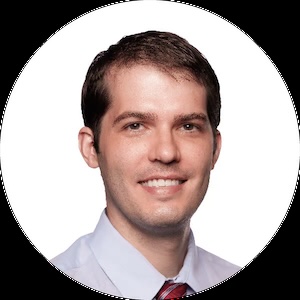
Shane C. Eizember, M.D.
Practice Summary:
Dr. Shane C. Eizember is an orthopaedic spine surgeon and is fellowship-trained in back and neck surgery. He treats patients 18 years of age and older.
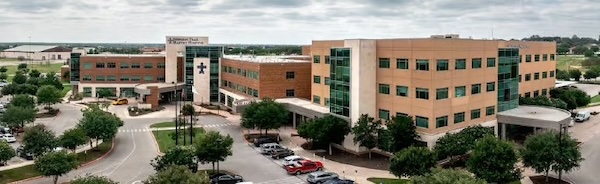
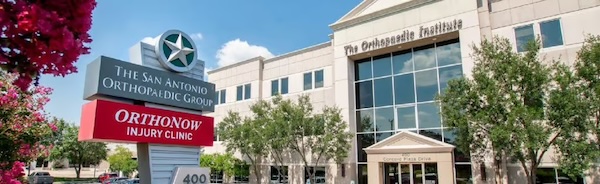
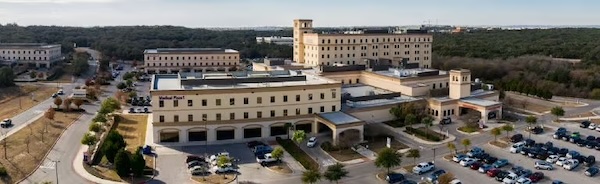
Dr. Eizember has appointments available at Brooks City Base and Westover Hills.
Practice Location: Brooks City Base and Westover Hills
Specialty: Back & Neck Surgery
Fellowship Training: Back & Neck Surgery
About Dr. Eizember:
Dr. Shane Eizember grew up in Rio Hondo, Texas, a small town in the Rio Grande Valley, where he graduated salutatorian of his high school class and earned all-state honors in football and baseball. He stayed close to home for college, attending the University of Texas – Pan American in Edinburg on a scholarship set aside for Valley students pursuing careers in health care, and graduated summa cum laude in Biology and Psychology — the first college graduate in his family.
He went on to medical school at UT Health San Antonio, graduating with membership in Alpha Omega Alpha, medicine’s national honor society, before matching into the prestigious Harvard Combined Orthopaedic Residency Program in Boston.
In Boston, Dr. Eizember trained across some of the country’s leading hospitals — Massachusetts General, Brigham and Women’s, Boston Children’s Hospital, and Beth Israel Deaconess — and completed a fellowship in spine surgery through the Beth Israel Deaconess/Harvard Medical School Combined Spine Fellowship.
After six years in Boston, Dr. Eizember and his wife, Stephanie — also a physician and a fellow Rio Grande Valley native — made the decision to bring that training home to South Texas. Since 2022, he has practiced as a fellowship-trained orthopaedic spine surgeon with TSAOG Orthopaedics & Spine in San Antonio, treating conditions of the neck and back — from spinal stenosis and disc herniations to revision surgery — with an emphasis on minimally invasive and motion-preserving techniques when appropriate.
Raised in South Texas, Dr. Eizember brings the same small-town values he grew up with into every patient visit: listening closely, explaining things plainly, and treating every patient like a neighbor. Outside the clinic, he enjoys spending time with his wife and three kids. A huge sports fan (GSG!), he volunteer coaches his kids’ sports teams, enjoys woodworking, and is always finishing a house project or two.
Education Information:
- Medical School: University of Texas Health Science Center at San Antonio
- Residency: Harvard Combined Orthopaedic Residency Program
- Orthopaedic Surgery
- Fellowship: Harvard Medical School/Beth Israel Deaconess
- Spine Surgery
Specialty Procedure
- Anterior and posterior cervical spine surgery• Thoracic spine surgery• Anterior and posterior lumbar spine surgery• Robot-assisted and navigation-assisted spine surgery• Minimally invasive spine surgery• Motion-preserving spine surgery• Revision spine surgery
- Use of ultrasonic scalpel in spine surgery
- Endoscopic spine surgery — pursuing advanced training
Treatment
- Cervical• Anterior cervical discectomy and fusion (ACDF)• Cervical disc arthroplasty / replacement• Posterior cervical laminectomy and fusionThoracic• Thoracic laminectomy and fusionLumbar
- Lumbar microdiscectomy
- Lumbar laminectomy
- Lumbar facetectomy
- Anterior lumbar interbody fusion (ALIF)
- Lateral lumbar interbody fusion (LLIF)
- Performed as prone transpsoas fusion (PTP) — single-position surgery allowing interbody cage placement and posterior fusion in one prone position without repositioning the patient
- Also known as XLIF (eXtreme Lateral Interbody Fusion) and DLIF (Direct Lateral Interbody Fusion)
- Posterior lumbar fusion
- Endoscopic spine surgery — pursuing advanced training
Conditions Treated
- Cervical• Cervical radiculopathy (pinched nerve in the neck / shooting arm pain, numbness, weakness)• Cervical spinal stenosis (narrowing of the spinal canal in the neck)• Cervical myelopathy (spinal cord compression in the neck)• Cervical disc herniation, protrusion, extrusion, sequestration (herniated / bulging / slipped disc in the neck)• Cervical spondylolisthesis (slipped vertebra in the neck)• Cervical degenerative disc disease (disc degeneration / wear-and-tear in the neck)
- Uncovertebral joint hypertrophy (enlarged joints in the neck that can narrow the nerve openings)
- Neck pain
- Neck strain / whiplash injury
- Cervical muscle strain (pulled muscle or muscle spasm in the neck)
- Thoracic
- Thoracic radiculopathy (pinched nerve in the mid-back)
- Thoracic spinal stenosis (narrowing of the spinal canal in the mid-back)
- Thoracic myelopathy (spinal cord compression in the mid-back)
- Thoracic disc herniation, protrusion, extrusion, sequestration (herniated / bulging disc in the mid-back)
- Thoracic spondylolisthesis (slipped vertebra in the mid-back)
- Thoracic degenerative disc disease (disc degeneration / wear-and-tear in the mid-back)
- Upper back pain / mid-back pain
- Thoracic muscle strain (pulled muscle or muscle spasm in the mid-back)
- Lumbar
- Lumbar radiculopathy (pinched nerve in the low back / sciatica / shooting leg pain, numbness, weakness)
- Lumbar spinal stenosis with neurogenic claudication (narrowing of the spinal canal in the low back / leg pain and cramping when walking)
- Lumbar disc herniation, protrusion, extrusion, sequestration (herniated / bulging / slipped disc in the low back)
- Lumbar spondylolisthesis (degenerative or isthmic) (slipped vertebra)
- Lumbar spondylolysis (stress fracture or small crack in the vertebra (pars defect))
- Degenerative disc disease (disc degeneration / wear-and-tear of the spine)
- Low back pain
- Lumbar muscle strain (pulled muscle or muscle spasm in the low back)
- General
- Spinal cord injury
- Spinal cord myelomalacia (softening of the spinal cord from chronic compression)
- Spinal cord signal change (abnormal signal within the spinal cord seen on MRI, often related to compression)
- Central canal stenosis (narrowing of the main spinal canal)
- Lateral recess stenosis (narrowing of the spinal canal where the nerve root branches off the thecal sac)
- Foraminal stenosis (narrowing of the opening where the nerve exits the spine)
- Facet arthropathy (arthritis of the small joints in the spine)
- Ligamentum flavum thickening (thickening of a ligament inside the spinal canal, a common cause of stenosis)
- Facet cyst (fluid-filled cyst arising from the facet joint that can cause nerve compression; usually a sign of spinal instability)
- Degenerative scoliosis / deformity (curvature of the spine that develops with age from wear and tear)
- Annular tear (tear in the outer wall of a spinal disc)
- Schmorl’s node (disc material pushing into the vertebra above or below)
- Modic changes (vertebral bone marrow changes seen on MRI, often tied to disc degeneration)
- Osteoarthritis of the spine (spinal arthritis)
- Spinal osteophytes (bone spurs)
- Disc osteophyte complex (combined disc bulge and bone spur pressing on the spinal canal or a nerve)
Awards/Recognition

Support Staff

Clinical Coordinator
Phone: 210-630-4645
Fax: 833-687-1315

Scheduling
Phone: 210-281-9595
Fax: 844-772-0899

Referral and Authorizations
Phone: 210-804-5600
Fax: 866-624-0593

Billing Specialist
Phone: 210-396-5369
Fax: 210-804-6801
Provider Videos
Publications, Books & Presentations
Reviews
Find A Location





© 2025 The San Antonio Orthopaedic Group, LLP. All Rights Reserved.