
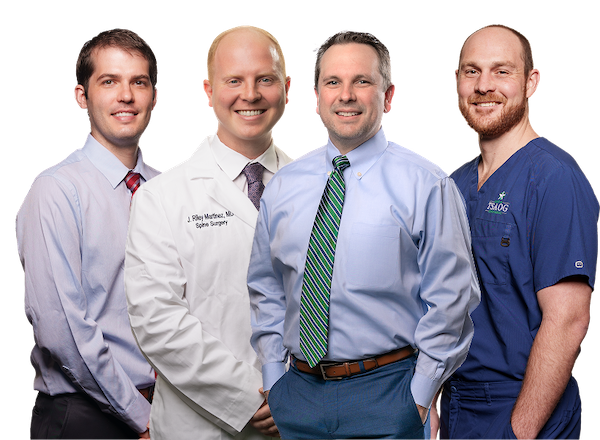
San Antonio's Spine Specialists




What We Treat
Conditions
Acute Neck and Back Pain
Chronic Back and Neck Pain
Degenerative Scoliosis
Herniated Discs
Injuries to the Neck and Back
Nerve Pain
Osteoarthritis of the Neck and Back
Radiculopathy
Ruptured Discs
Sciatica
Spinal Metastasis
Spinal Stenosis
Spine Fractures and Trauma
Spondylolisthesis
Work-Related Injuries
Treatments
Anterior Cervical Disc Decompression and Fusion
Anterior Cervical Discectomy
Artificial Cervical Disc Replacement
Deformity Correction
Implantation of Spinal Cord Stimulators
Laminoplasty
Minimally Invasive Techniques
Posterior Cervical Decompression and Fusion
Laminectomy
Lumbar Decompression and Fusion
Lumbar Micro-Discectomy
Microscopic Tubular Resection (MITR)
Microsurgical Techniques
Robot Assisted Spinal Fusion
Spinal Injections
Spine Tumor Resections
Vertebral Augmentation
Orthopedic Spine Surgery Options
When spine surgery is recommended, TSAOG's orthopedic spine surgeons help patients understand their diagnosis, surgical options, and expected recovery. Surgical care may be considered for certain disc problems, nerve compression, spinal stenosis, spine injuries, or other structural conditions of the spine.
Related Articles
What Is Spinal Stenosis? Symptoms, Causes, Diagnosis, And When To See A Doctor
How to Recognize a Herniated Disc and What to Do About It?
Minimally Invasive Treatment Options for Lower Back Pain
Meet Your Back and Neck Specialists



Frequently Asked Questions
When to See a Spine Surgeon?
A spine surgeon may be recommended when symptoms are severe, worsening, or not improving with nonsurgical care — or if you have significant nerve compression, loss of strength, spinal instability, or a condition affecting your ability to walk, work, or complete daily activities. Seeing a spine surgeon doesn't always mean you need surgery; the evaluation helps determine whether surgery is an appropriate option.
Spine Coditions We Treat
TSAOG treats a wide range of back, neck, and spine conditions, including herniated discs, sciatica, spinal stenosis, degenerative disc disease, pinched nerves, arthritis of the spine, neck pain, lower back pain, and spine injuries. Our spine doctors evaluate each patient's symptoms, medical history, and imaging when needed to recommend an appropriate treatment plan.
Nonsurgical Spine Treatment Options
Many back and neck conditions can be treated without surgery. Depending on your diagnosis, nonsurgical spine care may include pain management, physical therapy, chiropractic care, injections, or other conservative treatment options.
What to Expect at Your Spine Appointment
Your first spine appointment may include a review of your symptoms, medical history, prior treatments, and any available imaging, plus a physical exam evaluating your movement, strength, reflexes, and areas of pain or numbness. From there, your spine doctor can recommend next steps — imaging, nonsurgical treatment, referral to another specialist, or a surgical evaluation.
Your Path to Recovery Starts Here
Find a Location Near You
TSAOG Orthopaedics & Spine at Westover Hills

TSAOG Orthopaedics & Spine at CHRISTUS Medical Center
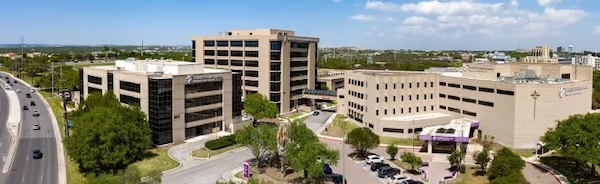
TSAOG Orthopaedics & Spine at Brooks City Base
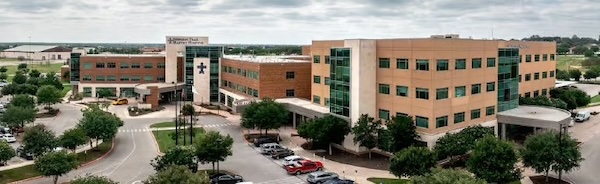
TSAOG Orthopaedics & Spine at Schertz Parkway
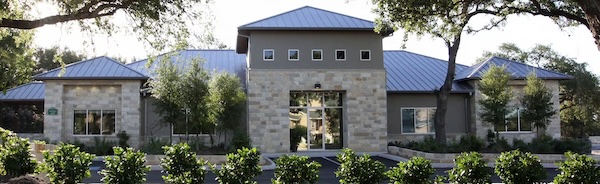
TSAOG Orthopaedics & Spine at New Braunfels
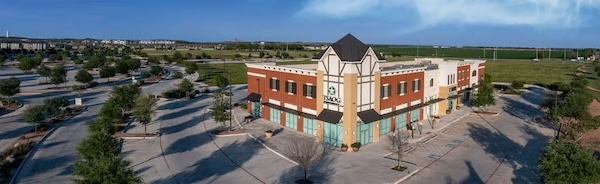
TSAOG Orthopaedics & Spine at Grayson Heights
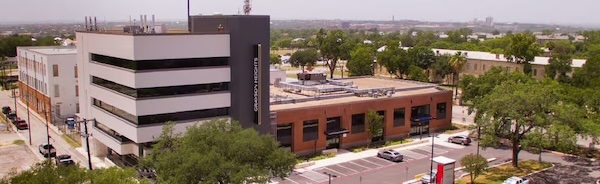
TSAOG Orthopaedics & Spine near Alamo Quarry Market
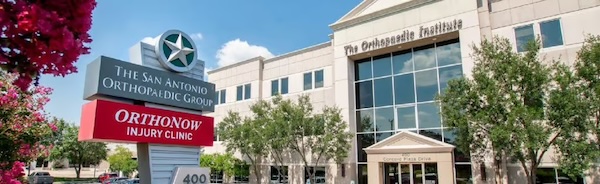
TSAOG Orthopaedics & Spine at Ridgewood






© 2025 The San Antonio Orthopaedic Group, LLP. All Rights Reserved.