

Understanding Shoulder Arthritis: Treatment Options and What to Expect
Written By Harrison Scofield, M.D.
As an orthopedic surgeon specializing in shoulder conditions, one of the most common ailments I see in patients is shoulder arthritis. Make an Appointment Harrison Scofield, M.D. Shoulder arthritis occurs when the cartilage that cushions the bones of the shoulder joint wears down over time, leading to pain, stiffness, and decreased function.
Symptoms of Shoulder Arthritis
Patients with shoulder arthritis typically experience:
- Persistent pain, which may worsen with activity or at night
- Stiffness and reduced range of motion
- Grinding, clicking, or popping sensations in the joint (crepitus)
- Weakness or difficulty lifting objects
- Swelling or tenderness around the shoulder joint
While there is no cure for arthritis, several treatment options can help alleviate pain and improve quality of life. In this article, I will walk you through the conservative management of shoulder arthritis and discuss surgical options, including anatomic and reverse total shoulder arthroplasty. I will also provide insight into what patients can expect during recovery and the success rates based on current literature.
Conservative Management of Shoulder Arthritis
Before considering surgery, most patients begin with conservative treatment options. These non-surgical interventions aim to reduce pain, improve function, and delay or potentially avoid surgery altogether.
- Activity Modification – Avoiding activities that exacerbate pain, such as heavy lifting or repetitive overhead movements, can help manage symptoms.
- Physical Therapy – Strengthening the muscles around the shoulder joint can improve stability and function while reducing stress on the joint itself.
- Non-Steroidal Anti-Inflammatory Drugs (NSAIDs) – Medications such as ibuprofen or naproxen can help reduce inflammation and pain.
- Corticosteroid Injections – Steroid injections into the shoulder joint can provide temporary relief from inflammation and pain, though repeated injections should be used cautiously due to potential joint damage over time.
- Hyaluronic Acid Injections – While more commonly used in knee arthritis, some studies suggest that hyaluronic acid injections may provide mild pain relief in shoulder arthritis. These are not FDA approved for treatment in the shoulder and I do not recommend these for treatment.
- Regenerative Medicine (PRP & Stem Cell Therapy) – These biologic treatments are still being studied for shoulder arthritis, and while some patients report improvement, robust clinical evidence is lacking at this time. They are not covered by insurance and are usually quite expensive so I do not recommend these for treatment.
If conservative measures fail to provide adequate pain relief and function is significantly impaired, surgery may be the best option.
Pre-Operative Evaluation and Planning
Before proceeding with surgery, we ensure that patients are healthy enough for the procedure. This involves obtaining pre-operative labs and medical clearance, especially for those with underlying health conditions. Additionally, we obtain a CT scan of the shoulder to assist with pre-operative templating. Using advanced 3D modeling software, we can meticulously plan the surgery, ensuring the most accurate placement of implants for optimal outcomes.
Surgical Treatment Options: Anatomic vs. Reverse Total Shoulder Arthroplasty
For patients with advanced shoulder arthritis who do not respond to non-surgical treatments, shoulder replacement surgery may be recommended. The two primary types of total shoulder arthroplasty (TSA) are anatomic total shoulder arthroplasty (aTSA) and reverse total shoulder arthroplasty (rTSA). The choice between these procedures depends on the condition of the rotator cuff and the extent of joint damage.
Anatomic Total Shoulder Arthroplasty (aTSA)
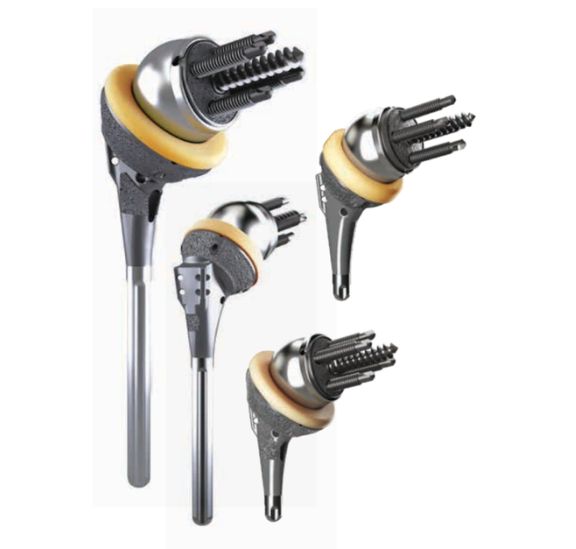
Anatomic TSA is used in patients with arthritis but an intact rotator cuff. This procedure involves replacing the arthritic ball-and-socket joint with prosthetic components that mimic the natural anatomy of the shoulder.
- Ideal Candidate: Patients with primary osteoarthritis and an intact rotator cuff.
- Expected Recovery: Patients typically wear a sling for the first 4-6 weeks, followed by physical therapy to regain motion and strength. Most patients can resume light activities within 3 months and full recovery takes about 6-12 months.
- Success Rate: Studies show that anatomic TSA has excellent long-term outcomes, with over 90% of patients experiencing significant pain relief and improved function at 10-15 years postoperatively
Reverse Total Shoulder Arthroplasty (rTSA)
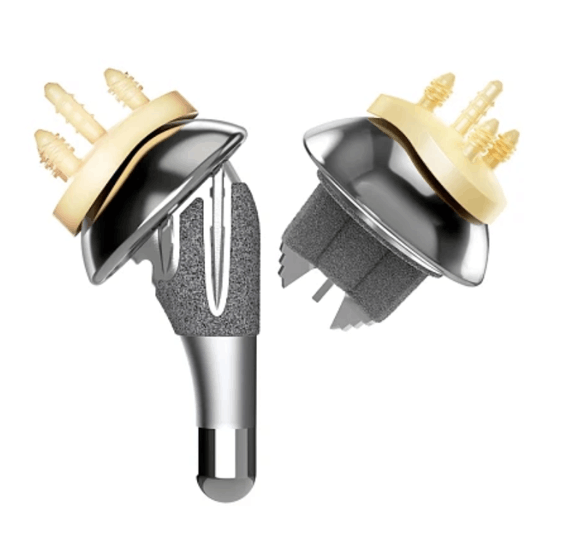
Reverse TSA is designed for patients with arthritis and a deficient rotator cuff. In this procedure, the normal ball-and-socket anatomy is reversed—placing the ball on the shoulder blade and the socket on the upper arm bone. This design allows the deltoid muscle to compensate for the deficient rotator cuff.
- Ideal Candidate: Patients with arthritis and a large rotator cuff tear, cuff tear arthropathy, or complex fractures.
- Expected Recovery: The post-operative course is slightly faster compared to TSA, with sling use for 2 weeks. Recovery from this surgery often does not require a structured rehab program but may be necessary. Full recovery and strength gains typically occur within 6-12 months.
- Success Rate: Reverse TSA has shown high success rates in properly selected patients, with studies reporting 85-95% of patients achieving good to excellent outcomes at 10 years. Additionally, reverse TSA has a lower risk of revision surgery in elderly patients. Overall shoulder range of motion will likely be less compared to patients who receive an anatomic total shoulder arthroplasty.
Post-Operative Expectations and Long-Term Success
Compared to a rotator cuff repair, a reverse shoulder replacement surgery typically recovers much faster and the rehabilitation is easier even though it is a bigger surgery. This is because the shoulder is being replaced and does not depend on rotator cuff healing like a repair does.
Patients should be aware of potential complications, including infection, implant loosening, nerve injury, and dislocation. However, with modern techniques and advancements in implant design, shoulder arthroplasty has become a reliable option for patients with debilitating arthritis.
Final Thoughts
Shoulder arthritis can significantly impact daily life, but effective treatments—both non-surgical and surgical—are available. Conservative management is often the first step, but when pain and dysfunction persist, total shoulder arthroplasty can offer excellent pain relief and functional improvement. If you are struggling with shoulder arthritis, consult with an orthopedic specialist to discuss the best treatment plan tailored to your needs.
If you have any questions about shoulder arthritis or shoulder replacement surgery, don’t hesitate to reach out to your orthopedic provider. Together, we can develop a plan to help you regain function and improve your quality of life.
Find the Right Orthopaedic Care Near You
Recent Articles
What is Patellar Instability? Symptoms, Causes, and Treatment Options
What is Dupuytren’s Contracture? Symptoms, Causes, and Treatment Options
Shoulder Replacement vs. Rotator Cuff Surgery: Which Do You Need?






© 2025 The San Antonio Orthopaedic Group, LLP. All Rights Reserved.